
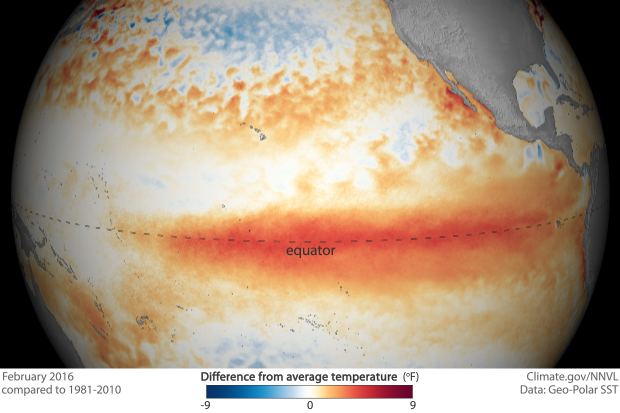
NOAA's Climate Prediction Center has placed an 82% probability on El Niño emerging in May–July 2026, with confidence rising to 96% by the heart of winter. The international climate model plume tracks even higher — close to 98%. For Montana, Idaho, and Wyoming homeowners, that isn't abstract meteorology. It's a signal about what the next twelve months of fire weather are likely to look like.
The 2026 fire season has already started. Three significant Western fires burned in March, before the season was supposed to begin. The work to harden a home is the work that has to happen before peak fire weather, not during it. This post lays out what the forecasts actually show, what's already burning, and what to do about it.
How does El Niño affect wildfire risk in the West?
El Niño shifts the Pacific weather pattern in a way that changes both winter precipitation and summer drying across the Western U.S. Some El Niño winters bring more moisture to parts of the West — which sounds like good news for a fire-prone landscape. The complication is that the same moisture that fills reservoirs in February also feeds grass, brush, and undergrowth. By the time summer heat arrives and that growth dries down, the result is more continuous fuel across more terrain. Fire scientists call it the El Niño–La Niña whiplash. It's a known driver of the kind of fast-moving fires that ride wind into Western communities.
The snowpack picture this spring shows where Montana sits in that cycle. Statewide snowpack is around 76% of normal, but the spread is dramatic. The Missoula area, Flint Creek, the Swan Valley, and the Blackfoot are close to normal. Most of the rest of the state is sitting at 40 to 85% of normal. The Powder and Tongue basins in southeastern Montana hit their lowest recorded snowpack on record this winter, and the Bighorn isn't far behind. Low snowpack means rivers and soil dry out earlier. Earlier drying means fire season starts sooner and burns hotter when it does.
What do the 2026 wildfire forecasts actually project?
The forecasts are pointing in the same direction across multiple agencies.
AccuWeather's 2026 wildfire outlook projects 5.5 to 8 million acres burned across the U.S. this year, with the broadest and most persistent risk across Arizona, New Mexico, Utah, Nevada, Idaho, western Montana, and the broader Northwest. The Northwest fire season may start near normal, but the risk expands sharply in July and August as the remaining snowpack melts off and dry thunderstorms move through.
The National Interagency Fire Center has flagged the Pacific Northwest, including Idaho, as the area most likely to see above-normal temperatures and below-normal moisture this summer. The U.S. Drought Monitor reports roughly 62% of the lower 48 states are already in some stage of drought — the worst spring drought on record since the monitor began tracking in 2000.
And the season isn't waiting for summer. The Panama Fire burned roughly 1,100 acres between Three Forks and Whitehall in southern Jefferson County in March. The Rehder Creek Fire made a 5,000-acre run near Roundup, prompting evacuations in the Bruner Mountain area. Wyoming's Kane Fire burned over 1,900 acres near Lovell — a Forest Service official on scene described the fire's behavior as the kind normally seen in August, not March. None of those would be remarkable fires in August. All three burned before peak season had started.
Why do most homes burn in a wildfire?
Most homes that burn in a wildfire don't burn because a wall of flame reached them. They burn because embers — small, wind-driven embers carried ahead of the fire front — find something to ignite within feet of the structure. Pine needles in a gutter. Bark mulch against siding. A juniper under a window. A stack of firewood near the wall. Decades of post-fire research from the Insurance Institute for Business and Home Safety and others have identified ember ignition in the immediate zone as the leading cause of home loss in wildland-urban interface fires.
That's why the work that matters happens close to the house, not far from it. The first five feet around the structure is where wildfire defense begins — gravel substrate instead of bark mulch, screened vents, debris cleared from deck corners. Defensible space outward in zones to 30 feet, then 100 feet. Class A roofing, hardened soffits, ember-resistant vents per the NFPA 1144, IWUIC, and California Building Code Chapter 7A standards. That work doesn't depend on whether a homeowner is on site when the fire comes through.
Beyond yard-level defensible space, structural treatment closes the remaining gap. CitroTech — the only EPA Safer Choice listed and UL Greenguard Gold certified fire inhibitor in the country — coats vulnerable wood, vegetation, and structural surfaces with a non-toxic, phosphate-free chemistry that resists ignition under radiant heat thresholds approaching 1,000°F. Treated surfaces remain effective for up to three months until heavy rainfall washes the product away. The system is permanently installed at the property, runs from an on-site tote of product, and doesn't depend on municipal water pressure or a working well — both of which can fail during a major wildfire event. For a fuller breakdown of what a permanent wildfire defense system actually does and why a rooftop sprinkler is the wrong tool for this threat, we have separate posts that go deeper.
The insurance picture matters too. For an example of how Western insurance markets are responding to the same risk picture the fire-weather forecasts are showing, see why Montana homeowners are losing their insurance and the documented-mitigation playbook for keeping coverage.
What should a Montana homeowner do right now?
Get the work done before fire season peaks, not during. Crews are already stretched. Materials lead times for code-grade roofing, vent products, and treatment systems get longer as the season progresses. The homes that are ready in May are the homes that are ready in August. The homes that are not ready in May are still not ready in August.
Three things, in order:
- Walk the first five feet around your home. Remove bark mulch and replace it with gravel. Clear pine needles from gutters and deck corners. Screen vents with 1/8-inch corrosion-resistant metal mesh. The defensible space guide covers the full Zone 0 checklist.
- Get a site assessment. Slope, wind exposure, water access, surrounding vegetation, building materials, and access road all change the calculus. A site-specific plan beats a generic checklist.
- Install structural defense before red flag season. Treatment, exterior wildfire defense systems, and home hardening to current WUI code are the layers that close the gap between defensible space and the structure itself.
If you're weighing options before fire season, here's what a wildfire sprinkler system costs in Montana.
Big Sky Fire Defense conducts free on-site wildfire risk assessments across Montana, Wyoming, and Northern Idaho. We walk the property, identify the specific vulnerabilities, and lay out what a CitroTech installation looks like for the home and the terrain.
Free site evaluation across Montana, Wyoming, and Northern Idaho. A written wildfire mitigation plan and a CitroTech defense installation tailored to your terrain — that is what we do.
Get Protected NowVisit bigskyfiredefense.com or call 406-422-2716.
About the author. Benton Rooks is the owner of Big Sky Fire Defense. He is an insurance professional and general contractor with thirty years of experience across the West.