
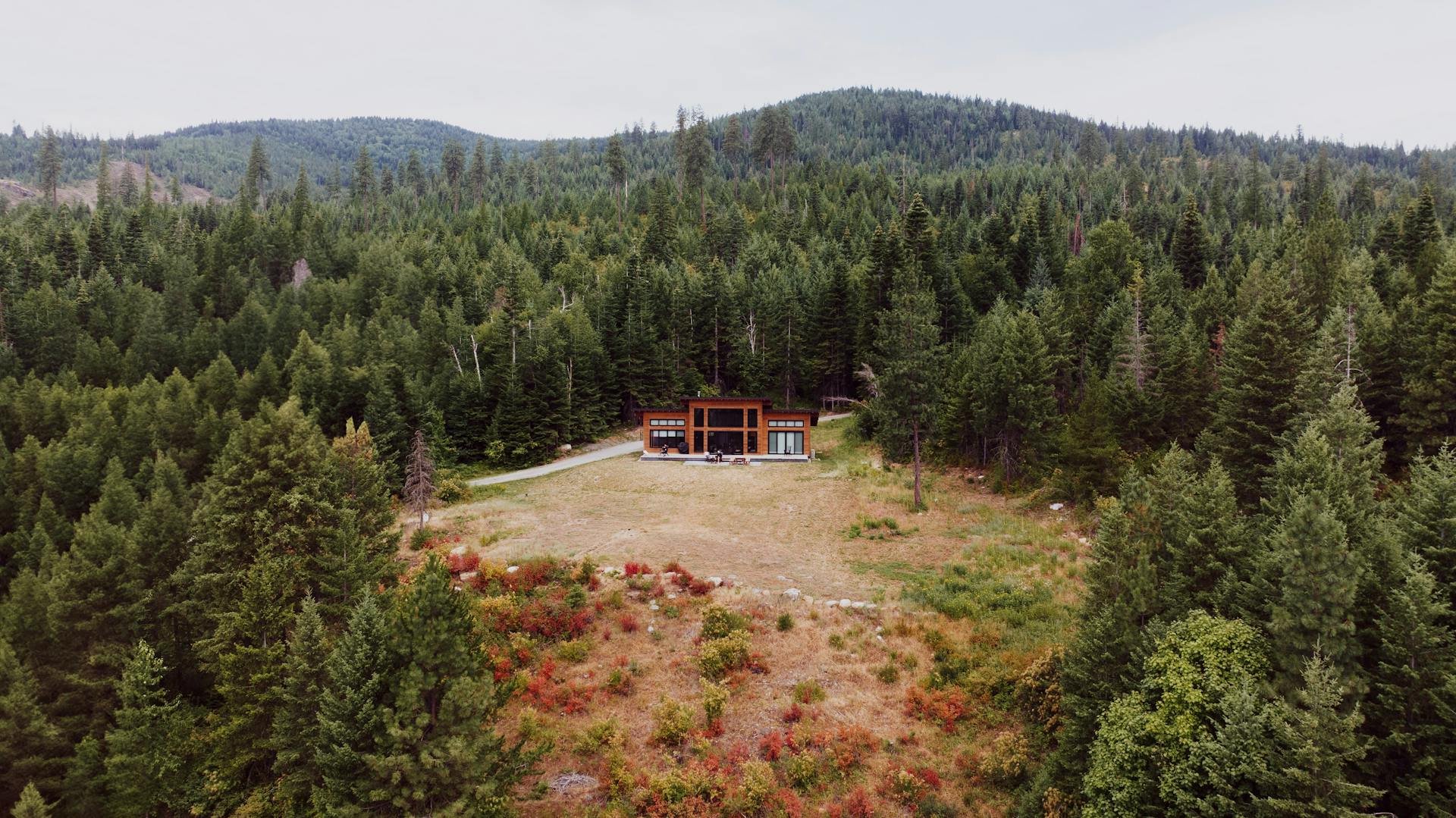
If you live in a wildfire-exposed corner of Montana — and most of us in this state now do — there's a good chance you've either gotten a non-renewal letter in the last two years, watched your premium climb on a renewal you didn't ask to change, or heard the same stories from a neighbor up the road. None of it is your imagination. The Montana home insurance market has shifted hard, and the people getting squeezed first are the ones with a treeline closer than they'd like.
Let's start with the numbers.Insurify reported that the average Montana homeowner premium climbed roughly 18% in 2025, ending the year near $2,400 — roughly a 20% increase over the past three years.[1] Some of that's wildfire. Some of it is hail and reconstruction costs. But wildfire is the variable that's pulling capacity out of the state. About 29% of Montana properties carry a high wildfire risk score, the highest concentration of any state in the country.[2]
Carriers don't like that kind of concentration. So a few things have started happening.
Some carriers stopped writing new business in higher-risk zip codes. Others tightened underwriting on renewals — bumping premiums, narrowing coverage, asking for inspections, or simply non-renewing properties they didn't want on the books anymore. In some cases, those non-renewals were tied to a fire that wasn't even close to the property. After the Jericho Mountain Fire south of Helena in summer 2025,[3] the state insurance commissioner had to issue an advisory memorandum reminding insurers that under Montana insurance law they cannot refuse, cancel, or limit coverage solely because a property is in an area perceived to be at wildfire risk.[4] Real risk, yes. Perceived risk alone, no.
That memorandum mattered. But it didn't solve anything for the homeowners already mid-fight with a carrier, and it doesn't change the underlying math: capacity is tightening, premiums are climbing, and the homeowners who get out cleanest are the ones with documented, mitigated properties.
This is where the Montana legislature stepped in.Authorizes carriers to give credits for wildfire mitigation — fire-resistant construction, defensible space, hardened roofs, mitigation systems — without those credits being treated as midterm changes to the policy or as illegal rebates.[5]
In plain language: if you do the mitigation work, your carrier now has a clean statutory basis to discount your premium. They aren't required to. But the door is open.
Comes at it from the other direction. If a carrier is using a wildfire risk score in your rating, your underwriting, or a non-renewal decision, HB 533 obligates them to disclose the data and methodology behind that score when you ask — within 30 days.[6]
That's leverage. If your score doesn't reflect the defensible space and mitigation work you've already done, you have a defined path to push back on it.
Both bills assume the same thing: you have mitigation work to point to, and you have the documentation to prove it.
So here's what to do, in plain order.
Assume your renewal is coming up for review.
If your policy is up for renewal in the next twelve months and your home is in or near a WUI area, treat it that way. Don't wait for the letter.
Walk your property like a carrier would.
What does the 0–5 ft zone look like — is there bark mulch, juniper, deck storage? Are your gutters full of needles? Is your siding combustible? Are your vents screened with fine mesh? Does your roof have a Class A rating? Most homes have small, fixable issues hiding in plain sight.
Add mitigation that actually changes the underwriting picture.
Defensible space and home hardening matter. So does a permanent fire defense system that doesn't depend on power, water pressure, or you being home. As a CitroTech partner installer, Big Sky Fire Defense installs CitroSafe™ wildfire defense systems — a self-contained, closed-loop sprinkler design developed by CitroTech that uses CitroTech's fire inhibitor recognized under EPA Safer Choice[7][8] — pre-treatment, not reactive defense.
Build the file before you need it.
Photos. Receipts. Invoices. Specifications. Dates. Product certifications. Before-and-after pictures of treated vegetation and structure perimeter. We hand off this packet on every install for exactly this reason — it's what your agent shows your carrier, and it's what backs up an HB 533 request if a risk score comes back wrong.
Talk to your agent before, not after.
Before you spend money, call your independent agent and ask which mitigation steps their carriers credit, and what documentation they need. The conversation goes much better when you're proposing solutions instead of reacting to a letter.
The Montana insurance picture isn't going to soften on its own. The homeowners who stay insurable, get their premiums in line, and have leverage when something gets challenged are the ones who treat wildfire risk like a project — not a worry.
If you want a free site evaluation and a written plan you can use in the insurance conversation, that's exactly what we do.
Get Protected NowVisit bigskyfiredefense.com or call 406-422-2716.