

Stop Fighting
Fires. Start
Preventing
Them.
Suppression is reactive. Insurance is reactive. Litigation is reactive. CitroTech is the only proactive tool on the market — applied weeks or months ahead of fire season, on the infrastructure and landscape most likely to ignite. The best fire response is the one you made weeks ago.
Infrastructure, Landscapes
& The People Who Manage Them.
Every organization below faces the same underlying problem: a wildfire ignited on their assets — or crossing their jurisdiction — is a multi-million-dollar event. We help you reduce that risk before it happens, not after.
Harden Poles. Harden Corridors. Reduce Liability.
Wooden poles, cross-arms, and right-of-way vegetation are the most common ignition points in utility-caused wildfires. CitroTech gives you a proactive mitigation measure that regulators, insurers, and the public can see on the ground.
- Long-duration wooden pole treatment
- Right-of-way vegetation management
- Substation and facility perimeter protection
- Documented, EPA Safer Choice recognized chemistry
- A real mitigation record for rate cases and litigation defense
Protect Communities Before Fire Season Starts.
County budgets spend the vast majority of wildfire dollars on suppression, evacuation, and recovery. CitroTech moves the spend upstream — treating the roads, public facilities, and vegetation corridors that decide whether a community survives an ignition.
- Egress and ingress roadway vegetation treatment
- Public buildings, shops, and critical facility protection
- County right-of-way and fuel break support
- Documentable mitigation for FEMA / HMGP grant programs
- Pilot-scale projects before broader rollout
A Tool Built for the Landscape Scale.
DNRC, BLM, Forest Service, and municipal fire departments are all working the same problem with limited tools. CitroTech adds a non-toxic, EPA Safer Choice recognized option to the mitigation toolbox — one that can be applied in advance, on targeted fuels, without the environmental cost of phosphate retardants.
- Fuel treatment on high-risk corridors and trailheads
- Protection for cabins, guard stations, historic structures
- Zero phosphates, zero heavy metals
- Pairs with existing defensible-space programs
- Rapid deployment on seasonal or event-driven risk
Suppression
Is Reactive.
Prevention Isn't.
Retardant Drops Happen After Ignition
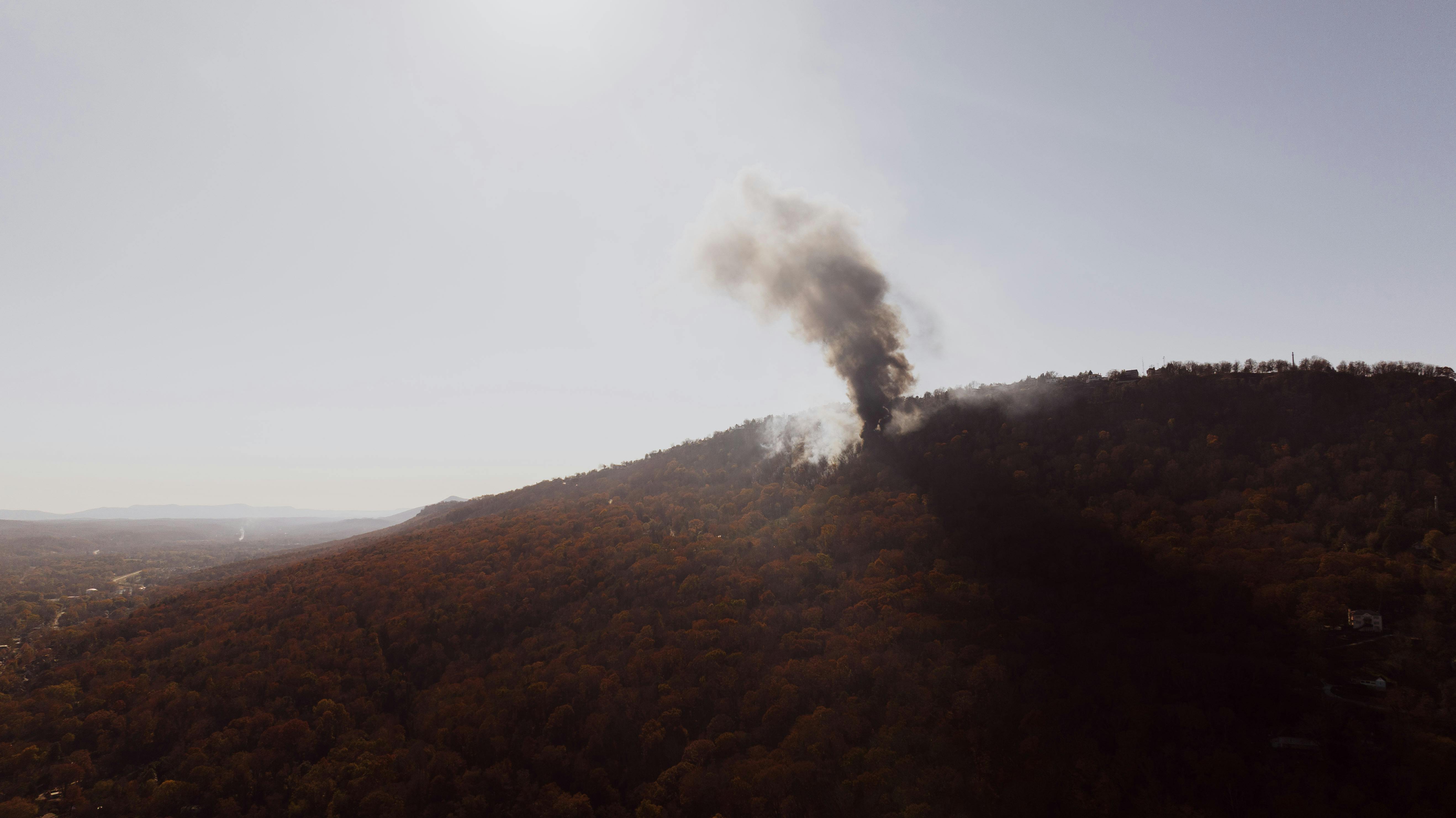
By the time a tanker is in the air, the fire is already running. Phosphate retardants are a suppression tool — deployed in an emergency, at enormous cost, on a fire that's already started. Prevention isn't in the equation.
Phosphate Retardants Leave a Long Shadow
Peer-reviewed research has documented roughly 840,000 lbs of toxic heavy metals deposited across U.S. forests and watersheds from aerial phosphate drops over a recent twelve-year window. The cure can be as harmful as the fire.
Utility-Caused Ignitions Drive Litigation
PG&E, Xcel, Hawaiian Electric — the largest wildfire settlements in U.S. history all trace back to utility infrastructure. Juries and regulators now look for documented proactive mitigation, not just post-ignition response.
Mechanical Fuel Treatment Is Slow and Expensive
Cutting, chipping, and hauling fuel out of rights-of-way and corridors is labor-intensive, seasonal, and never keeps up with regrowth. You treat the same corridor over and over, and the risk still comes back.
Insurance Is a Shrinking Backstop
Carriers are pulling out of high-risk regions, raising premiums, and tightening exclusions. For utilities and counties, the ability to prove you mitigated risk proactively is becoming a financial necessity, not a talking point.
Assess. Treat.
Prevent.
CitroTech is a non-toxic, EPA Safer Choice recognized fire inhibitor applied directly to infrastructure and vegetation — before fire season — by a trained, certified crew. The process is simple. The impact is what changes.
Assess
We walk the corridor, the facility, or the jurisdiction with you. Poles, substations, ROW vegetation, egress roads, critical buildings — we map the actual ignition risk and build a treatment plan scoped to your budget and priorities.
Treat
CitroTech is applied directly to wooden infrastructure and surrounding fuels — by spray, from trucks, by hand crews, or by aerial delivery where needed. Zero phosphates. Zero heavy metals. No disruption to normal operations while we work.
Prevent
Treated surfaces resist ignition, suppress flame spread, and reduce ember-driven fire behavior for up to three months on vegetation and far longer on treated wood. You have documentation, photos, and a defensible record that mitigation was performed before the fire, not after it.
Suppression vs.
Prevention.
| Factor | Phosphate Retardant / Suppression | CitroTech® Proactive Treatment |
|---|---|---|
| When it's deployed | ✗ After ignition — emergency response | ✓ Ahead of fire season — planned mitigation |
| Environmental impact | ✗ ~840,000 lbs heavy metals deposited in U.S. forests (2009–2021) | ✓ Zero phosphates. Zero heavy metals. |
| EPA Safer Choice recognized | ✗ No | ✓ Only long-duration fire inhibitor in the U.S. |
| Persistence on target | ✗ Hours to days | ✓ Up to three months on vegetation; longer on treated wood |
| Applied to what | ✗ Active fire front only | ✓ Poles, ROW fuel, roadsides, structures, facilities |
| Documentation for regulators & insurers | ✗ Incident reports after the fact | ✓ Pre-season mitigation records, photos, treatment logs |
| Cost profile | ✗ Unpredictable — emergency mobilization rates | ✓ Planned, scoped, budgeted in advance |
| What it actually solves | ✗ Slows a fire that's already burning | ✓ Stops many ignitions from starting in the first place |
The Documentation
Regulators & Insurers
Expect To See.
When a public utility commission, an insurance carrier, a county commissioner, or a plaintiff's attorney asks what you did to mitigate wildfire risk — you want to hand them a file, not a story. CitroTech meets every standard that matters.
EPA Safer Choice
The only long-duration fire inhibitor in the U.S. recognized by the EPA. Non-toxic formulation.
UL Greenguard Gold
Verified extremely low indoor-air chemical and VOC emissions. Safe around occupied facilities and sensitive environments.
ASTM E84 Extended
Proven flame-spread resistance and fire-safety performance — the standard for Class A ratings on treated wood.
TER 2504-101
Compliant with International Building Code (IBC) and International Residential Code (IRC) fire-protection requirements.
From Poles
to Property Lines.
Every one of these is a proactive treatment — applied on a planned schedule, documented, and measured in risk reduction before fire season, not in damages afterward.
Wooden Poles & Cross-Arms
We apply CitroTech® directly to combustible materials across the right-of-way — vegetation, wooden structures, and utility infrastructure. A documented fire-hardening measure on the asset most likely to be named in a cause-and-origin report.
ROW Vegetation Treatment
Targeted application on the grasses, brush, and ground cover directly beneath and around transmission and distribution corridors. Reduces ignition probability from arcing, equipment failure, and vehicle strikes — on the fuel that actually carries the fire.
Substation & Facility Perimeter
Treat the vegetation, fencelines, and surrounding landscape around substations, switchyards, maintenance shops, and critical facilities. Protects the asset from fire coming in — and from fire starting on-site.
Egress & Ingress Roadways
Treat the vegetation corridors along evacuation routes, emergency access roads, and community ingress points. When minutes matter, you want the only road out to be the one the fire hasn't crossed.
Critical Buildings & Shops
County offices, fire halls, maintenance yards, schools, historic structures, guard stations. Treatment can be applied to wood siding, decks, and surrounding vegetation without closing the building or disrupting operations.
Homes & Businesses Without CitroSafe™
Not every property owner is ready to install a full sprinkler system — but every property owner can benefit from a seasonal spray. We treat vegetation, wood decks, and wood siding directly on homes and commercial buildings, delivering proactive protection at a fraction of the cost of a sprinkler install.
Treat The Landscape.
Defend The Assets.
For utilities, counties, and agencies, proactive fire defense works best as a two-layer program: broad CitroTech treatment across vegetation and wooden infrastructure, paired with CitroSafe™ sprinkler systems on the highest-value or highest-risk facilities.
Big Sky Fire Defense delivers both. We scope the treatment zones, apply CitroTech directly to combustible materials across the right-of-way — vegetation, wooden structures, and utility infrastructure, and install CitroSafe™ on the substations, shops, and critical buildings that justify a dedicated system. One contact, one crew, one paper trail.
Talk to Us About a PilotCitroTech Proactive Treatment
Applied before fire season on poles, ROW vegetation, roadside corridors, and exposed wood structures. Planned, documented, scoped to your budget — mitigation that exists on paper before anyone asks whether it did.
CitroSafe™ Sprinkler Systems
For the critical assets that need active defense — substations, maintenance yards, historic buildings, remote facilities. A standalone sprinkler array with an onboard inhibitor tank, triggered remotely, keeps working when nobody's on-site.
The result: Landscape-scale risk reduction plus active defense on the assets that matter most. A mitigation program you can put in front of regulators, insurers, commissioners, and a jury — and have it actually mean something.
What Utilities & Agencies
Ask Us First.
Let's Talk About
A Pilot Project.
Tell us about the corridor, the facility, or the jurisdiction you're worried about. We'll walk it with you, scope a defined pilot, and give you a plan that moves spending upstream — from suppression to prevention.
Start the ConversationServing utilities, counties & agencies across Montana, Wyoming, and Northern Idaho