
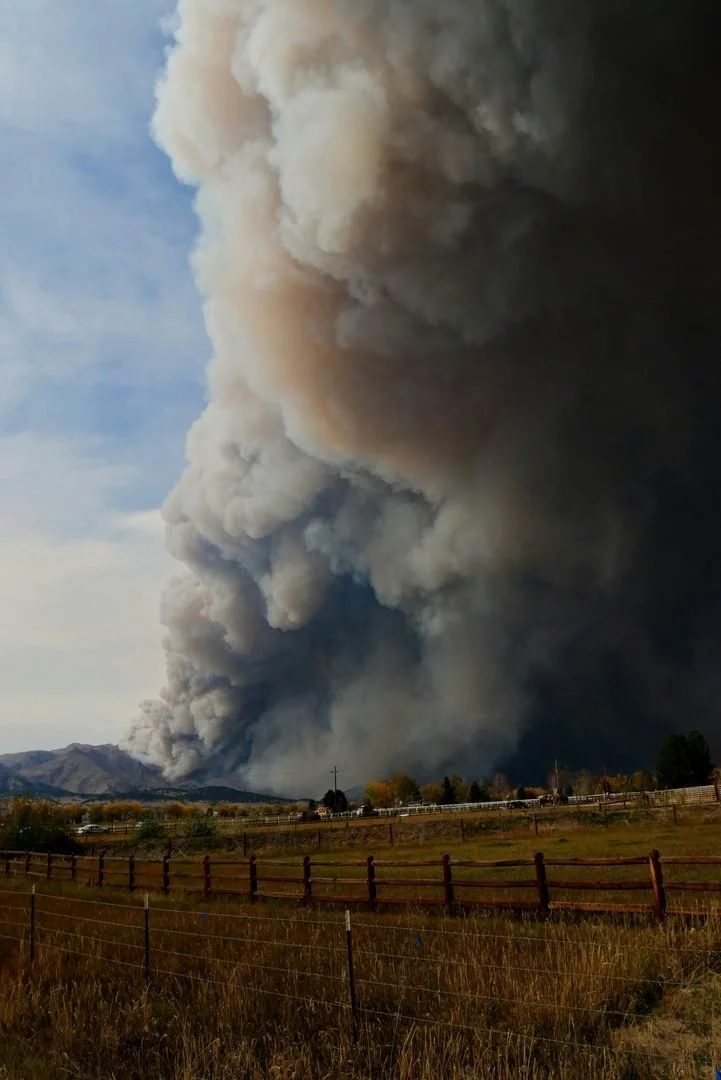
If you own property in Montana's Wildland-Urban Interface — or anywhere within fifty miles of timber country — you've probably started asking about wildfire suppression systems. Maybe your insurance carrier sent a non-renewal letter. Maybe you watched a neighbor's ridge burn last August. Maybe your agent told you your coverage depends on documented mitigation.
Whatever brought you here, you're asking the right question. The wrong answer — the one that gets homes lost — is assuming that any suppression system is better than nothing, or that price is the best way to compare them.
This is the contractor's breakdown. Thirty years of construction and property work across the West, now focused entirely on wildfire defense in Montana, Wyoming, and Idaho. Here's what the systems actually do, where they fail, and what makes the difference on a real fire.
Why Montana Is a Different Problem Than Most States
Montana's wildfire environment punishes suppression systems that work fine in California or Colorado. A few specific factors matter:
- Fire season is extending. What used to run July through September now starts in May in drought years and runs through October. Any seasonal-only system has a longer vulnerability window than it did ten years ago.
- Wind-driven ember cast is the primary threat to structures — not flame contact. Embers travel a mile or more ahead of the fire front. A suppression system that only addresses flame contact is solving the wrong problem.
- Rural properties frequently lose power and water pressure before fire arrives. Municipal systems and grid-dependent equipment fail at exactly the wrong moment.
- Contractor shortages after a fire event mean rebuild timelines of 18 to 36 months in Western Montana. The cost of losing a structure is not just the structure — it's three years of displacement.
The question isn't whether you can afford wildfire suppression. It's whether you can afford to rebuild — and whether you'll be able to get the insurance to cover it.
The Main Categories of Wildfire Suppression Systems
1. Rooftop Water Sprinkler Systems
Water sprinkler systems — roof-mounted heads connected to your well or municipal supply — are the most commonly discussed option and the most commonly misunderstood one.
The theory is sound: wet a roof before fire arrives and reduce ignitability. The execution breaks down in real Montana fire conditions in ways that are worth understanding before you spend money on one.
Problem 1: Wind Defeats the Water
Picture turning on a lawn sprinkler on a windy day. Most of the water goes sideways. You're not watering your lawn — you're watering your neighbor's. Now scale that image to a wildfire event, where sustained winds of 30 to 50 miles per hour are standard, with gusts well beyond that.
Rooftop sprinkler heads are designed for calm conditions. In a wildfire-driven wind event, the spray pattern breaks down completely. Water that should be coating your roof eaves and siding is blown off the structure before it lands. The areas that need coverage most — the underside of eaves, the junction between roof and wall, the vent openings — are exactly where wind-deflected water fails to reach.
This isn't a hypothetical. It's physics. The same wind that's pushing the fire toward your house is defeating your water-based suppression system at the same moment.
Problem 2: You Don't Have Enough Water — and Nowhere to Store It
A serious wildfire defense deployment on a typical Montana home requires sustained flow across the roof and perimeter for an extended period. The numbers add up fast.
Rooftop systems running at standard flow rates burn through 10,000 gallons in well under two hours of active deployment. Two hours may not be enough. The fire front may stall nearby. Spot fires may reignite treated areas. The threat window on a structure during an active fire event is not predictable.
So the question becomes: where are you storing 10,000 gallons — or 20,000 — on your Montana property? A 10,000-gallon tank is roughly the size of a small shipping container. It requires engineered footings, a dedicated fill system, and ongoing maintenance. Many rural Montana properties don't have the site conditions or the permits to accommodate that infrastructure.
And if you're relying on your well or municipal supply instead of an onboard tank — see Problem 1, then add the fact that municipal water pressure collapses during active fire events as emergency services draw from the same supply, and well pumps lose power when the grid goes down, which routinely happens before fire reaches structures.
The math on water-based systems for Montana properties doesn't close without a very large storage investment that most homeowners haven't priced into their thinking.
Problem 3: Embers Don't Care About a Wet Roof
The primary ignition pathway for structures in wildfire events is not flame contact with the roof surface — it's ember intrusion. Embers travel a mile or more ahead of the fire front, driven by the same winds that are defeating your sprinkler pattern.
A wet roof does nothing for the ember that lands, in the middle of the night, on the combustible materials on the house — a piece of wood siding, a wood deck — or the combustible vegetation around it — the spruce tree near the corner of the lot, the decorative shrubs planted right against the foundation. That's where embers take hold and start a fire, and it's exactly what a roof-only system never reaches.
The competition's answer is to wet everything. But water dissipates and evaporates fast in an active fire's heat and wind, and you only have so much of it — the moment the spray can't keep up or your supply runs low, those surfaces dry out and the protection is gone.
This is why we use CitroTech fire inhibitor instead of water. Rather than briefly wetting a surface, CitroTech bonds to the siding, the deck, and the vegetation and raises the temperature it takes to ignite them — so the protection is already in the material when the embers arrive, and it doesn't evaporate. Suppression systems that only address the roof surface are solving the wrong problem.
Problem 4: The Heat Evaporates the Water Before It Lands
This is the one most homeowners haven't considered, and it's the most fundamental physics problem with water-based suppression in a serious fire event.
Wildland fire combustion zone temperatures run between 1,800°F and 2,200°F. Radiant heat at the structure surface — before the flame front even arrives — exceeds 1,000°F in a wind-driven event, while relative humidity simultaneously drops into the single digits. At those conditions, water droplets evaporate in flight. They never reach the surface.
This isn't a failure of the sprinkler system design. It's a failure of water as a medium at extreme heat and low humidity. The droplets leave the sprinkler head, enter air that is hundreds of degrees above water's boiling point, and turn to vapor before they contact siding, eaves, or decking. The roof doesn't get wet. The protection doesn't happen.
Combine that with wind pushing the spray off target, inadequate water storage, and the ember intrusion problem — and you have a system that fails on four independent fronts simultaneously, in exactly the conditions it was supposed to address.
Water sprinkler systems are not worthless. In calm conditions, with adequate supply, and someone present to monitor — they provide real protection. But as a standalone suppression solution for an unattended Montana property in a serious wind-driven fire event, the failure modes are predictable, compounding, and well-documented.
2. Phosphate-Based Fire Retardants
Long-term fire retardants — the red-dyed product you see dropped from air tankers — are sometimes marketed in a modified form for residential use. They work by coating surfaces with a phosphate compound that chars and insulates rather than burns.
The limitations for residential use in Montana:
- The visible red dye is standard in aviation applications. Residential versions are typically clear, but the chemistry is similar — and it is not classified as non-toxic for use around families, pets, and water sources.
- Effectiveness degrades with rainfall. Montana's spring and early-summer moisture patterns mean a retardant applied in May may have significantly diminished protection by peak fire season in July and August.
- Application requires professional equipment and trained crews. It is not a product homeowners apply themselves with reliable results.
3. Foam-Based Systems
Foam systems work by coating surfaces with a thick layer that slows moisture evaporation and creates a physical barrier to ignition. They are used by some fire agencies for structure protection during active events.
For permanent residential installation in Montana, the practical limitations include degradation in UV exposure and weather, the need for periodic reapplication, and the fact that foam is most effective when applied just before fire arrives — which requires the system to be activated at the right moment by someone monitoring conditions.
4. Chemical Fire Inhibitor Systems — The CitroTech Approach
This is the category that changes the performance equation for Montana properties. Chemical fire inhibitors — specifically CitroTech, the only EPA Safer Choice certified fire inhibitor in the United States — work differently than water, retardant, or foam.
CitroTech doesn't cool surfaces or create a physical barrier. It interrupts combustion at the molecular level, binding to treated surfaces and dramatically raising the temperature threshold required for ignition. Treated vegetation, wood siding, and structural surfaces stop behaving like fuel.
What separates CitroTech from the other categories:
- EPA Safer Choice certification — non-toxic, safe around families, pets, livestock, and water sources. No other long-duration fire inhibitor in the U.S. carries this certification.
- UL Greenguard Gold certification for indoor air quality — verified extremely low chemical and VOC emissions.
- ASTM E84 Class A fire resistance rating on treated lumber — the same standard used for commercial fire-rated assemblies.
- Dries completely clear with no odor, no residue, and no visible trace.
Big Sky Fire Defense is Montana's CitroTech-partnered installer. We deploy this chemistry in three configurations depending on what a property needs.
The Three Suppression System Configurations We Install
Direct Spray Treatment — Seasonal Protection
The entry point. We arrive on-site, walk the property, and apply CitroTech directly to the highest-risk surfaces: vegetation within defensible space zones, wood decks, wood siding, fencing, and outbuildings. Most properties take a few hours. You don't need to be present.
Best for: Homeowners who want meaningful protection this fire season without a permanent installation.
Duration: Up to three months per application — longer on structural surfaces than on vegetation.
Starting cost: Approximately $3,000 for most properties, depending on square footage and terrain.
Limitation: Requires re-treatment each season. Does not provide automated, evacuation-proof coverage.
CitroSafe™ Permanent Suppression System — The Complete Solution
A CitroSafe installation is a permanent, standalone suppression system with its own onboard CitroTech inhibitor tank, dedicated pump, reserve power, roof-mounted sprinkler array, and perimeter heads. It operates completely independently of your well, your power grid, and municipal water supply.
The key feature for Montana property owners: you activate it from your phone as you evacuate. The system deploys CitroTech inhibitor across the roof and perimeter while you're already on the road. The property defends itself.
Best for: Any Montana property where the owner needs evacuation-proof, automated protection without being on-site.
Duration: Permanent installation. System lives on the structure year-round.
Starting cost: Pricing is per system, not per property. Each CitroSafe™ system is a standalone install with its own tank, pump, controller, and distribution — a single-system install starts at approximately $14,000. A property with multiple structures needing several dedicated systems scales accordingly and runs substantially higher, frequently well into six figures. We provide a range once scope is defined. All figures are ballpark ranges, not quotes.
CitroTech Lumber Treatment — Build-Phase Protection
For new construction in Montana's WUI zones, CitroTech is applied directly to framing lumber and structural wood during the build — before walls close, before finishes go on. The chemistry bonds into the material and provides Class A fire resistance for the life of the structure.
This is the one option that can only happen during construction. Once walls are closed, it's no longer available. Builders and architects working on WUI projects in Montana, Wyoming, and Idaho should build this into their standard specification.
Best for: New construction in fire-prone areas. WUI compliance. Homeowner insurance documentation.
Duration: Permanent — bonded into the wood. No reapplication.
What Montana's Insurance Situation Means for Suppression Systems
Montana HB 533, passed in 2023, requires insurers to disclose how wildfire risk scoring affects your premium. HB 136 requires carriers to offer mitigation discounts for documented wildfire protection measures.
That second law is the one that makes suppression system documentation directly valuable to your policy. A CitroSafe installation — with full documentation of system specs, CitroTech certifications, and treatment records — gives your agent something concrete to put in front of the underwriter.
Some companies offer subscription-based monitoring programs. We don't. What we offer is permanent infrastructure you own, with EPA Safer Choice chemistry your carrier can verify, at a price point that's typically less than one year of the premium increases Montana homeowners are absorbing right now.
If you've received a non-renewal notice or a significant premium increase in the last twelve months, the first call you should make is to your agent — and the second should be to a wildfire defense contractor who can document mitigation that meets HB 136 standards.
How to Choose the Right System for Your Montana Property
The honest answer depends on three things: your timeline, your budget, and whether you need coverage this season or a permanent solution.
- If fire season starts in six weeks and you need protection now: direct spray treatment is the fastest path. We can schedule, quote, and treat most Montana properties within two weeks.
- If you want permanent, evacuation-proof protection and you're willing to invest in infrastructure: CitroSafe is the answer. Design, permitting, and installation typically run four to six weeks.
- If you're breaking ground on a new build in a WUI zone: lumber treatment needs to be scheduled during the framing phase. Call before you're ready to close walls.
- If you want both seasonal and permanent protection: direct spray during this fire season while we design and install a CitroSafe system for next year is a common path for Montana property owners.
We start with aerial imagery and property photos. Most quotes don't require a site visit unless the project is complex. Call, text, or use the contact form — we'll tell you what we'd recommend for your specific property before you commit to anything.
Get a Quote for Your Montana Property
Big Sky Fire Defense is based in Philipsburg, Montana. We serve property owners across Montana, Wyoming, and Northern Idaho — from the Bitterroot Valley and Flathead to Teton County and the Sheridan area.
406-422-2716 | benton@bigskyfiredefense.com
We'll review your property using aerial imagery, walk you through which system fits your situation, and give you a written quote before any work begins. No pressure. No runaround.
Get protected now — tell us about your Montana property and we'll recommend the right suppression system before fire season closes in.
Get Protected Now