
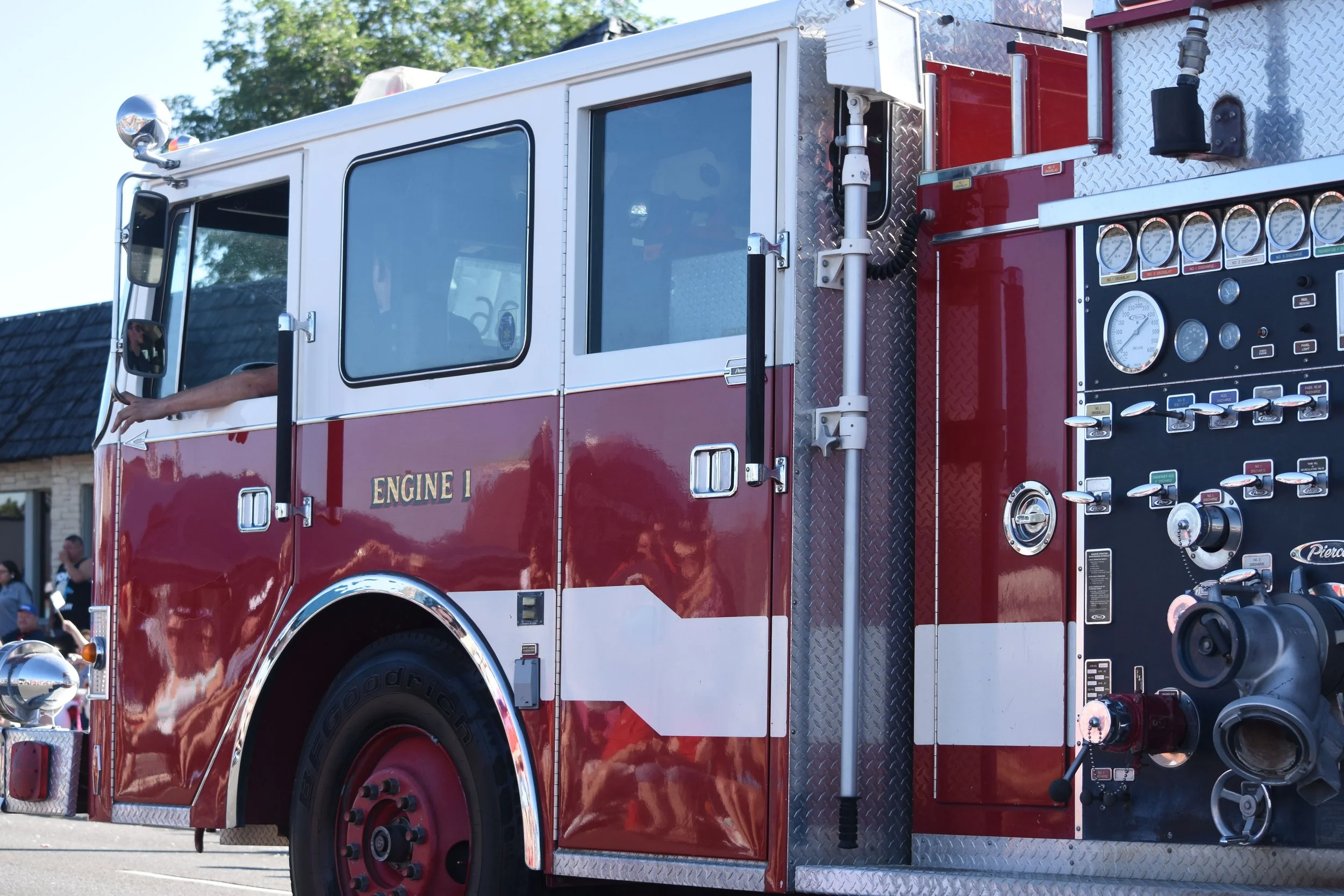
Montana firefighters deserve a lot of credit.
They train. They respond. They sacrifice time, sleep, and sometimes far more than that. They show up in conditions most people would run from — wind, smoke, steep terrain, limited water supply, multiple homes at risk, changing fire behavior.
This article is not about criticizing fire departments. It is about respecting what they are up against, and understanding what homeowners can do before crews ever need to arrive.
The better prepared your home is, the better chance everyone has.
The Question Worth Asking
Montana depends heavily on local fire departments and volunteer firefighters. That is not a weakness — it is part of how Montana communities protect each other. More than 350 of the state's fire departments rely on volunteer personnel. In Ravalli County, the Bitterroot Star has reported the firefighting force is all-volunteer. In Big Sky, the fire department serves over 80 square miles of unincorporated mountain resort area — a large, complex service area with serious wildfire exposure.
Firefighters do their part. The real question is whether your home is doing its part too.
And rural does not always mean a cabin miles from anywhere. In Montana, it can mean a multimillion-dollar home five minutes outside a small town — a mountain subdivision with one road in and out, a resort-area property surrounded by timber and steep slopes, a home in the Bitterroot, Paradise Valley, Whitefish, or outside Bozeman or Missoula city limits. High-end homes often have features that increase wildfire vulnerability if they are not addressed: large decks, wood siding, complex rooflines, privacy landscaping, long driveways, limited turnaround space.
Wildfire does not care what the house cost. It cares whether there is fuel, access, wind, and a way to ignite the structure.
What Makes a Home Easier to Defend
A prepared home supports firefighters instead of making their job harder. That does not mean crews will always be able to defend every structure — wildfire conditions can change fast. But when they do have the opportunity, preparation matters.
- Visible address markers. If crews cannot quickly identify the property, they lose time. Address numbers should be visible from the road, reflective where practical, and not hidden by vegetation, gates, or snowbanks. Simple, cheap, and often overlooked.
- Clear driveway access. Fire apparatus need room to get in, turn around, and get out. Narrow driveways, low-hanging branches, tight turns, steep grades, and locked gates all create problems. If you have a long private driveway, ask the hard question: could a fire engine navigate it safely?
- Defensible space. The first five feet around the home should be especially clean. Beyond that, vegetation should be thinned, limbed, and maintained. The goal is not clearing everything — it is reducing the easy path fire can use to reach the structure.
- Reduced combustibles near the structure. Outdoor cushions, firewood, lumber, cardboard, and storage piles can all create ignition points. During fire season, keep combustibles away from the home — especially under decks, beside garages, and along exterior walls.
- Clear propane and utility areas. Propane tanks, generators, and fuel storage need clearance and visibility. In an emergency, crews should not have to hunt for critical utilities through smoke and brush.
- Home hardening. Defensible space matters, but a property can have clean vegetation and still have a vulnerable structure. The roof, vents, windows, soffits, garage doors, and crawlspace openings all deserve attention. For a high-value home, targeted upgrades to vents and siding can be the difference between a survivable structure and a total loss — at a fraction of the rebuild cost.
For a room-by-room version of the weekend work, read our guide: How Can I Protect My Home From Wildfires?
What a Wildfire Self-Defense Plan Actually Is
A wildfire self-defense plan is not a plan to ignore evacuation orders. It is not a plan to stand outside with a garden hose while embers are flying.
It is a plan built before the emergency. The property is cleaned up. The access is clear. The structure is hardened. Vulnerable surfaces are treated. When officials say to go, you go — and the home has been given the best possible chance while you are gone.
Preparation happens before the fire. Evacuation happens when officials tell you it is time to go. Those two things work together.
How Big Sky Fire Defense Can Help
Big Sky Fire Defense helps homeowners prepare properties before wildfire season puts them to the test. We look at the home the way wildfire looks at the home — where embers can land, where they can collect, where they can enter, and what exterior materials give fire an easy path.
From there, we help with a layered approach.
Home Hardening
For many homes, construction upgrades are the most important next step. Big Sky Fire Defense can evaluate and complete home hardening work including Class A roofing, fire-resistant siding, upgraded windows and exterior doors, ember-resistant attic and crawlspace vents, soffit and fascia upgrades, deck modifications, and gutter protection. If the roof, siding, or vents are major weak points, that needs to be part of the conversation — no spray treatment or defense system substitutes for a structurally vulnerable home.
Seasonal CitroTech Spray Treatment
Big Sky Fire Defense is a CitroTech partner serving Montana homeowners. For properties that want meaningful added protection without a full exterior system, seasonal spray treatment is a strong option. CitroTech can be applied to vulnerable vegetation, exposed wood, decks, and high-risk ignition areas around the home. It lasts up to about three months depending on weather and site conditions — meaning a properly timed spring or early-summer application can cover a significant portion of the active fire season.
Community pricing may be available when nearby homes, HOAs, or neighborhoods schedule treatment during the same service window.
CitroTech Exterior Wildfire Defense Systems
For higher-risk properties — multimillion-dollar homes, large decks, heavy vegetation, complex rooflines, limited access, or limited water supply — a CitroTech exterior wildfire defense system is the stronger long-term investment. These systems deploy CitroTech across the areas wildfire is most likely to attack: vegetation, decks, exposed wood, and other exterior ignition points based on the site design. Seasonal spraying is a smart first layer. A permanent system is the durable play.
Frequently Asked Questions About Rural Wildfire Self-Defense
What is a wildfire self-defense plan?
A wildfire self-defense plan is preparation done before the emergency, not a plan to stay behind during one. It means the property is cleaned up, access is clear for fire apparatus, the structure is hardened against embers, and vulnerable surfaces are treated. When officials say to evacuate, you evacuate — and the home has been given the best possible chance while you are gone.
Should I stay and defend my home during a wildfire?
No. When evacuation orders come, follow them. A self-defense plan is not about standing outside with a garden hose while embers are flying — it is about doing the preparation work in advance so the home can defend itself, and so firefighters have a property they can work with if conditions allow. Preparation happens before the fire. Evacuation happens when officials say it is time to go.
What makes a rural home easier for firefighters to defend?
Visible address markers, clear driveway access with room for fire apparatus to turn around, maintained defensible space, combustibles moved away from the structure, clearly visible propane and utility areas, and a hardened structure — roof, vents, windows, soffits, and crawlspace openings. None of this guarantees a save, but when crews have the opportunity to defend a home, preparation matters.
My home is only a few minutes from town. Is it still at rural wildfire risk?
Often, yes. In Montana, wildfire exposure is about fuel, terrain, access, and construction — not distance from a coffee shop. A multimillion-dollar home in a mountain subdivision with one road in and out, heavy timber, a long driveway, big decks, and wood siding can carry more wildfire risk than a modest cabin on open ground. Wildfire does not care what the house cost.
How long does CitroTech spray treatment last?
A properly applied CitroTech treatment lasts up to about three months depending on weather, exposure, and site conditions. A well-timed spring or early-summer application can cover a significant portion of Montana's active fire season, and community pricing may be available when nearby homes schedule treatment during the same window.
Schedule a Discovery Call with Big Sky Fire Defense
If you own a rural, mountain, or high-value home in wildfire country, now is the time to think through the plan.
On a discovery call, Big Sky Fire Defense can walk you through defensible space, access concerns, home hardening, seasonal CitroTech spray treatment, and CitroTech exterior wildfire defense systems — and help identify whether your property needs simple preparation, construction upgrades, seasonal treatment, a permanent system, or a combination.
No pressure. No scare tactics. A practical conversation about how to prepare the home before wildfire crews ever need to respond.
One road in. Timber on three sides. A long driveway. Let's make sure your home is doing its part — before the season tests it.
Schedule a Discovery CallAbout the author. Benton Rooks is the owner of Big Sky Fire Defense. He is an insurance professional and general contractor with thirty years of experience across the West.
Sources: Montana volunteer fire department figures from the Montana State Fire Chiefs' Association recruitment site. Ravalli County all-volunteer characterization from the Bitterroot Star, April 2024. Big Sky Fire Department service area from bigskyfire.org.