
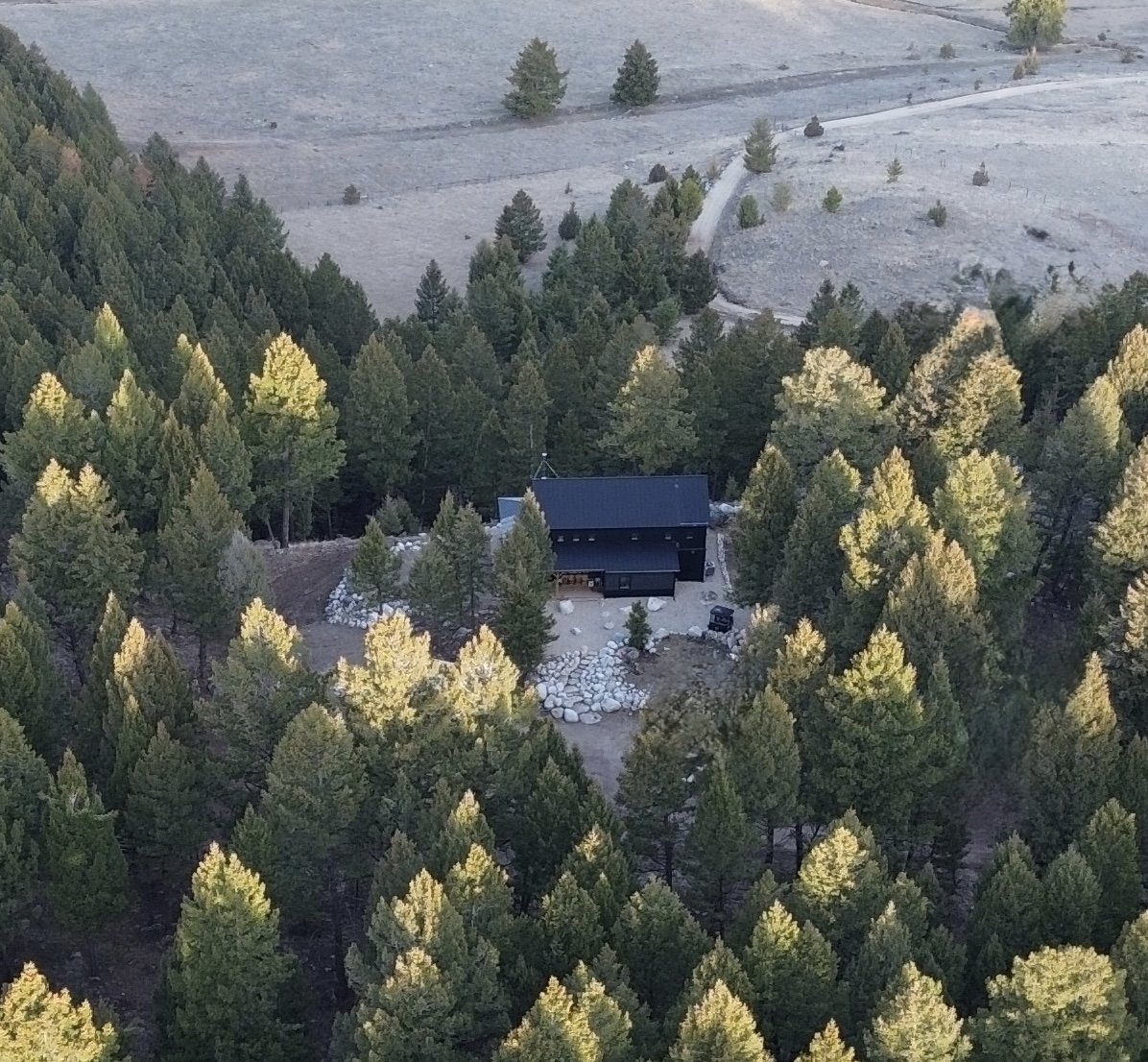
Yes, you can protect a home in heavy forest from wildfire, but you need a layered plan that reduces fuel, limits ember exposure, hardens the structure, improves access, and protects the remaining vulnerable materials. You do not have to strip the property bare, but you do need to manage the forest, prepare the home, and build a wildfire defense plan around the actual risks on the site.
Most people who live in heavy timber chose it on purpose. The privacy. The shade. The wildlife. The feeling of being tucked into the landscape instead of parked in a subdivision.
I get it. I built my own home in heavy forest. I did not want to clear-cut everything around it. I wanted the house to belong in the setting. I also knew the forest had to be managed and the structure had to be protected.
That is the balance. You can live in the forest without pretending the forest is not fuel.
You Do Not Have to Remove Every Tree
The goal is not to turn a forested property into a gravel parking lot. The goal is to take away the easy path wildfire uses to reach the house.
That usually means thinning trees, cutting ladder fuels, limbing branches, cleaning the ground, and creating separation between vegetation. The trees do not all have to go. They just cannot form a continuous fuel path from the forest floor into the canopy and toward the structure.
On my own property we thinned and limbed within roughly 120 feet of the house, farther in some spots. We pulled ladder fuels and built out the defensible-space zones.
We still have a couple of trees close to the house. They are part of a managed plan, not an accident.
That is the difference. A tree near the home is a different animal when the surrounding fuels are reduced, the lower limbs are gone, the ground is maintained, the structure is hardened, and the weak points are covered.
What Makes Forested Homes Vulnerable
Homes in heavy timber usually have a stack of things working against them. Dense trees. Deadfall. Ladder fuels. Pine needles. Steep slopes. Long driveways. Limited access. Limited water. Big decks. Wood siding. Privacy landscaping. Complex rooflines. Combustible outdoor living areas.
None of that means the home is doomed. It means the home needs a plan.
Wildfire does not need every tree to burn. It needs one path to the structure. That path might run through vegetation. It might also run through a wood deck, dry debris, open vents, exposed siding, or combustible material stacked near the house.
This is where a lot of owners get it wrong. They focus only on the trees. The forest matters. The house matters just as much.
The Home Has to Be Part of the Plan
If you live in heavy timber, the structure itself has to be looked at through a wildfire lens. Roofing. Siding. Decks. Vents. Access. Gutters, soffits, fascia, trim, garage doors, windows, and every exterior opening.
On my own home we ran a Class A standing seam metal roof. In the vulnerable areas we used metal siding. The house was designed and built unvented, which takes a major ember-entry problem off the table. Around the first 5 feet we used gravel, and we extended it farther in some areas.
But we still have wood. Some wood siding. Roughly 800 square feet of wood deck on timber framing. That is real life. Most owners are not going to strip every feature they love off the house. The job is to understand the risk and protect those areas on purpose.
On my deck, the underside is screened with stainless steel ember-resistant screening. The deck is built into the wildfire defense plan and the CitroTech system. The driveway is easy to reach. The address numbers are posted and readable.
Because the home was built and protected in layers, I am comfortable with the risk. Not because wildfire is harmless. Because the weak points were handled.
Defensible Space Is the Foundation
If you live in heavy forest, defensible space is not optional.
Start at the house and work out. The first 5 feet should be clean, lean, and as noncombustible as you can make it. Gravel, stone, pavers, concrete, and clean hardscape beat bark mulch or dry vegetation pushed up against the wall.
Farther out, cut ladder fuels, limb the trees, open up spacing, clear dead material, and keep the vegetation maintained.
This does not mean wrecking the property. It means managing the fuel. A forested homesite in the Bitterroot or up around Whitefish can still feel like the woods and be far safer than the unmanaged lot next door.
Where Big Sky Fire Defense Fits In
Big Sky Fire Defense helps Montana homeowners build wildfire defense plans for real homes in real country. Forested homes. Mountain homes. Rural properties. High-value homes where the owner wants protection without ruining the setting.
Depending on the property, that plan might include defensible space guidance, home hardening, Class A roofing, fire-resistant siding, ember-resistant vent protection, deck work, seasonal CitroTech spray treatment, or a full CitroTech exterior wildfire defense system.
Big Sky Fire Defense is a CitroTech partner serving Montana homeowners. We sell, apply, and install CitroTech-based wildfire protection for existing homes.
For some wooded homes, seasonal CitroTech spray treatment is the right first move. It goes on vulnerable vegetation, exposed wood, decks, exterior combustible surfaces, and the high-risk ignition areas around the home. Depending on weather, exposure, application area, and site conditions, CitroTech can last up to about three months.
For higher-risk forested properties, a full CitroTech exterior wildfire defense system can make more sense. These systems are built to deploy CitroTech around the home and the surrounding vulnerable areas before wildfire exposure.
The right answer depends on the property. Not a generic checklist. Not a one-size-fits-all system. The actual home, forest, access, water supply, materials, and exposure.
Frequently Asked Questions About Forested Homes
Can you protect a home in heavy forest without clearing all the trees?
Yes. You do not have to remove every tree or strip the property bare. The goal is to break the continuous fuel path from the forest floor into the canopy and toward the structure through thinning, cutting ladder fuels, limbing, and creating separation between vegetation, while keeping trees that are part of a managed plan. A tree near the home is far less of a liability when the surrounding fuels are reduced, the lower limbs are gone, the ground is maintained, the structure is hardened, and the weak points are covered.
What makes homes in heavy timber more vulnerable to wildfire?
Forested homes often stack up risk factors: dense trees, deadfall, ladder fuels, pine needles, steep slopes, long driveways, limited access, limited water, big decks, wood siding, privacy landscaping, complex rooflines, and combustible outdoor living areas. None of that means a home is doomed. Wildfire only needs one path to the structure, and that path can run through vegetation, a wood deck, dry debris, open vents, or exposed siding. It means the home needs a plan that addresses both the forest and the structure.
How much defensible space does a forested home need?
Start at the house and work outward. The first 5 feet should be clean, lean, and as noncombustible as possible, favoring gravel, stone, pavers, concrete, and clean hardscape over bark mulch or dry vegetation against the wall. Farther out, cut ladder fuels, limb the trees, open up spacing, clear dead material, and keep the vegetation maintained. This manages the fuel without wrecking the property.
Does CitroTech help protect homes in heavy forest?
For some wooded homes, seasonal CitroTech spray treatment is a strong first move, applied to vulnerable vegetation, exposed wood, decks, exterior combustible surfaces, and high-risk ignition areas around the home. Depending on weather, exposure, application area, and site conditions, it can last up to about three months. For higher-risk forested properties, a full CitroTech exterior wildfire defense system can make more sense; these are built to deploy CitroTech around the home and surrounding vulnerable areas before wildfire exposure.
Do I have to remove trees that are close to the house?
Not necessarily. Trees close to the house can remain when they are part of a managed plan rather than an accident, meaning the surrounding fuels are reduced, the lower limbs are removed, the ground is maintained, the structure is hardened, and the weak points are covered. The right answer depends on the actual home, forest, access, water supply, materials, and exposure, not a generic checklist.
Schedule a Discovery Call
If you live in heavy forest, the goal is not panic. The goal is planning.
You do not have to remove every tree. You do not have to ruin the property. You do need to be honest about the risk and build a layered plan around the home.
Big Sky Fire Defense can walk the property, flag the vulnerable areas, and help you decide whether defensible space improvements, home hardening, seasonal CitroTech spray treatment, or a full CitroTech exterior wildfire defense system makes sense.
Schedule a discovery call and we will go through the options before wildfire season puts the property to the test.
Schedule a Discovery CallAbout the author. Benton Rooks is the owner of Big Sky Fire Defense. He is an insurance professional and general contractor with thirty years of experience across the West.