
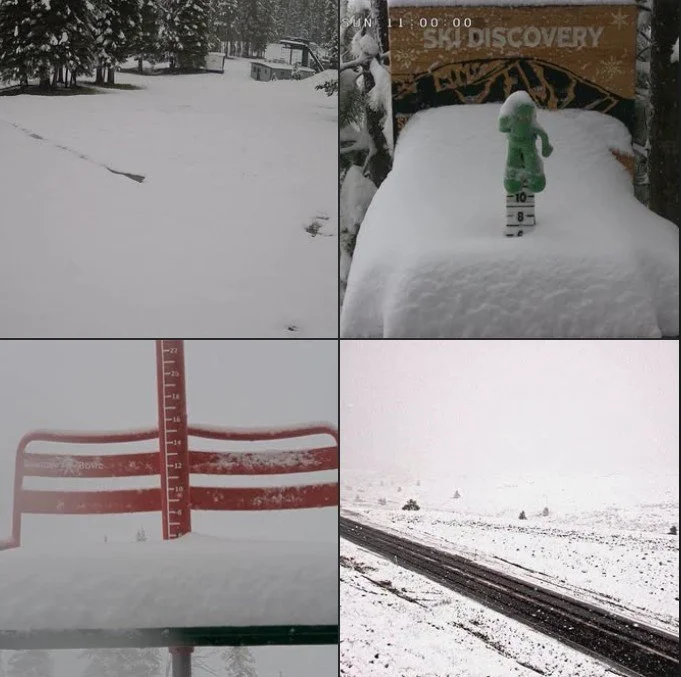
Right now it does not feel like fire season in western Montana. It's the end of June, and around Philipsburg the ground is wet. We've had several days of rain. The grass is green, the creeks are running, and every driveway and job site is mud. At our elevation — around 5,500 feet — it feels like spring. Higher up, it still looks like winter.
There's fresh snow in the mountains of southwest Montana. Local reports show several inches up high, and close to seven inches at Discovery near Georgetown Lake. Snow has been showing up on the mountain cameras at places like Bridger Bowl and Big Hole Pass too.
So yes. It's wet. That's good news.
It does not mean fire season is canceled.
Rain Helps. It Doesn't Replace Preparation
A wet stretch in late June buys western Montana homeowners time. It slows the drying, raises the humidity, greens up the grass, and calms fire behavior down for a while.
That is not the same thing as protection.
The mistake I see homeowners make is simple: I'll deal with it when fire season starts. That sounds reasonable when the driveway is mud and it's snowing above 6,500 feet. But by the time fire season feels obvious, you're already behind. When there's smoke in the valley, the contractors are booked, the dry windows are hard to schedule, the HOAs are scrambling, and everyone wants the same work done at the same time.
Rain buys time. It doesn't do the work for you.
Western Montana Can Be Wet While the West Is Burning
One of the strange things about wildfire season is that conditions can be completely different from one region to the next.
Right now parts of western Montana are wet, muddy, and cool. At the same time, Utah and Colorado are dealing with serious fire activity, with large fires along the Utah-Colorado border and major growth already this season.
That contrast matters. It's easy to look out the window in Philipsburg, Big Sky, Bozeman, Missoula, the Bitterroot, Whitefish, or Kalispell and think we're fine. Maybe today we are.
But fire season isn't decided by one wet week. It's decided by what happens next.
What Happens After the Rain
After a wet late-June stretch, a few things tend to happen.
First, the grass and brush keep growing. That's what we're seeing now — green grass, running creeks, wet soil, heavy growth. It all makes the landscape look safe.
Second, people relax. The firewood stays stacked against the house. The pine needles stay in the gutters. The deck stays full of debris. The mulch stays against the siding. The HOA meeting gets pushed another month.
Third, July and August show up. Longer dry spells, heat, wind, lower humidity, and cured grass can change the picture fast. Fine fuels — grass, pine needles, leaves, light brush — dry out quicker than people expect. A property that feels soaked in late June can look very different after two or three weeks of hot, dry weather.
That's why this is the planning window. Not the panic window.
Green Grass Becomes Fuel Later
Green grass looks harmless right now.
But strong growth in June, followed by heat and wind later in the summer, is how that same grass cures into flashy fuel. It carries fire fast — across open ground, along fence lines, into the brush, and toward homes, decks, garages, and sheds.
That doesn't mean you should panic every time it rains. It means you should pay attention. A muddy driveway in June does not guarantee a fire-ready property in August.
The Home Is Still the Weak Point
Wildfire risk is not just about trees.
Homes are usually lost over the small things close to the structure — embers, debris, vents, decks, siding, fences, firewood, and combustible material stacked near the house. The wet window is the time to walk your property and knock out the obvious ones:
- Clean the pine needles out of the gutters
- Pull the debris out from under the deck
- Move firewood away from the house
- Pull mulch back from the siding
- Cut back shrubs and grass touching the walls
- Check vents and other ember-entry points
- Look at wood fences, stairs, decks, and sheds that tie fuel to the house
- Clear combustible material out of the first 5 feet around the home
None of this is glamorous. It's also the most important work you can do, and most of it is free. These aren't August problems. They're June planning problems.
Then Add the Belt and Suspenders
Say you've used the wet window well. The gutters are clean, the debris is out from under the deck, the firewood is moved, and the grass is cut back from the house.
That's the foundation. Now look at what's left.
You can't move the deck. You can't strip the siding off the house. You can't haul off every tree, and you wouldn't want to — those trees are half the reason you live here. There is always combustible material left around a home: the wood, the decking, the fences, the vegetation you keep on purpose.
That's where the belt-and-suspenders move comes in. Once the property dries out, you schedule a seasonal CitroTech® spray to treat what you couldn't clear away. Defensible space takes the fuel away. CitroTech treats what's still standing.
What CitroTech Is and What It Does
CitroTech® is a fire inhibitor. It's not a sprinkler and it's not a coat of paint. It's a treatment we spray on vegetation, wood, and the exterior combustible areas around a home.
Here's the difference that matters: water wets, CitroTech coats. Water can knock a surface down for a few minutes, but in wildfire conditions — wind, low humidity, dry fuel — a wet surface dries out fast. CitroTech is designed to coat the surface and stay there, creating a temporary fire-inhibitor layer before wildfire ever shows up.
The product we use on vegetation and defensible space is CitroTech®-31. CitroTech describes it as plant-safe, non-toxic, biodegradable, and clear-drying — and it's the only EPA Safer Choice fire inhibitor in the country. Applied right, it leaves a thin, transparent barrier on the plants and surfaces without changing how your landscape looks. For wood — decks, siding, fences, exposed beams, raw lumber — there's CitroTech-34, built to help wood assemblies hit Class A fire performance.
It is not a magic shield. No treatment makes a home immune to wildfire, and CitroTech doesn't replace defensible space. It's one more layer — the suspenders that back up the belt.
If you want the full rundown on what gets treated, how it's applied, and how long it lasts, read our seasonal CitroTech wildfire treatment page.
Why It Has to Wait for a Dry Window
There's a catch, and it's the whole reason this wet stretch matters: we don't spray CitroTech when it's wet.
The surfaces need a proper dry window. Wet vegetation, wet decks, wet siding, and mud are not the conditions for a seasonal treatment.
So this weather isn't the time to assume the risk is gone. It's the time to do the prep, get on the schedule, and be ready for the next dry window.
Wet weather is for preparation. Dry weather is for application.
Why HOAs Shouldn't Wait
HOAs and property managers have an even bigger reason to move early.
A single homeowner can make a decision quickly. A community can't. Community wildfire planning takes coordination — properties get reviewed, common areas get considered, and access roads, shared fuel zones, boundaries, and individual homes all need attention.
Waiting until there's smoke in the valley isn't a plan. By then everyone is reacting at once.
Community seasonal spray programs should be discussed and scheduled before peak fire season pressure hits. That gives boards, managers, homeowners, and us the time to make better decisions. For communities around Big Sky, Bozeman, Philipsburg, Missoula, the Bitterroot, Whitefish, Kalispell, and the rest of western and southwest Montana, the right time to start that conversation is before the landscape dries out.
The Bottom Line
Late-June rain and mountain snow are welcome. Nobody around here is complaining about moisture.
But rain doesn't clean your gutters. Snow at Discovery doesn't move the firewood off your siding. Muddy roads don't protect your deck from embers in August.
The smart move is to treat this wet stretch as a planning window. Do the prep now, and get on the schedule so the CitroTech treatment goes on the moment it dries out. Because fire season doesn't start when the first flame shows up. For a homeowner, it starts while there's still time to do something useful.
Schedule Seasonal Wildfire Treatment
Big Sky Fire Defense is a CitroTech® partner serving Montana, and we provide seasonal CitroTech spray treatment for homeowners, HOAs, and property managers across western and southwest Montana — Philipsburg, Big Sky, Bozeman, Missoula, the Bitterroot Valley, Whitefish, Kalispell, and the surrounding wildfire-exposed communities.
A seasonal CitroTech treatment can provide protection for up to about three months and has to be applied during proper dry conditions. No service can make a home immune to wildfire — the goal is to reduce ignition risk and add another layer before the season turns.
If you own or manage a wildfire-exposed property, now is the time to plan and get on the schedule before the dry windows fill up.
Get on the schedule for a seasonal treatment and we'll line up your next dry window before fire season puts the property to the test.
Schedule Seasonal TreatmentAbout the author. Benton Rooks is the owner of Big Sky Fire Defense. He is an insurance professional and general contractor with thirty years of experience across the West.