
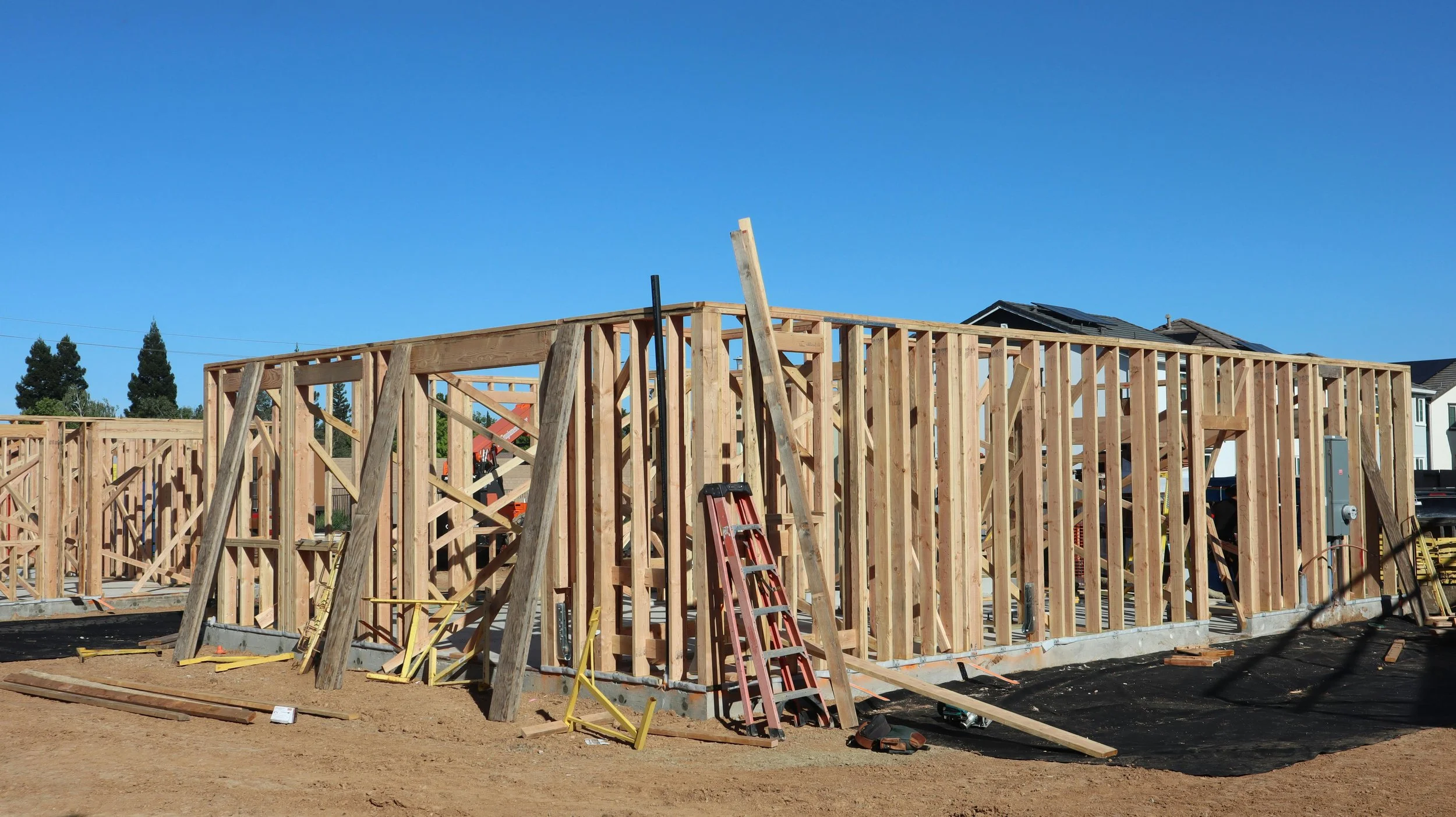
For more than 30 years, I built custom homes. Like most builders, my focus was on craftsmanship, beautiful architecture, incredible views, and creating homes that fit naturally into the landscape. If you had asked me twenty years ago what made the perfect mountain home, my answer would have been simple: exposed timber, natural stone, large windows, covered porches, and homes tucked into the trees. I still love every one of those things.
But today, I'd build that same home differently—not because I've stopped appreciating beautiful architecture, but because the reality of wildfire has changed the way I think about building. Thirty years of building taught me one important lesson: the best builders never stop learning.
What I'd Build Differently Today
Six years ago, when I built my own home in the forest, I intentionally designed it to be wildfire resilient. I chose a Class A standing seam metal roof, an unvented roof assembly, and spent countless hours creating defensible space by thinning trees, limbing branches, and removing hazardous fuels. Even after all of that, I kept asking myself one question: What else can I do?
Why Water Wasn't the Answer
I wasn't looking for another product to sell. I was looking for a better way to protect my own investment. That question led me to research nearly every wildfire protection option I could find. I looked at traditional water-based systems and other suppression methods. For my property, I kept coming back to one practical challenge: water. Across much of the American West, water is a precious resource. Storing tens of thousands of gallons simply isn't realistic for many homeowners.
That research eventually led me to CitroTech® and a layered approach that made sense for my home. Before I ever recommended it to anyone else, I installed a system on my own property. That's how Big Sky Fire Defense was born.
Today we specialize in exterior wildfire defense systems designed specifically for each property. Our systems can be configured to operate off-grid using dedicated tanks and pumps, meaning they don't depend on grid power or domestic water when utilities may be unavailable. Combined with an EPA Safer Choice–recognized fire inhibitor such as CitroTech, these systems become one layer in a complete wildfire resilience strategy.
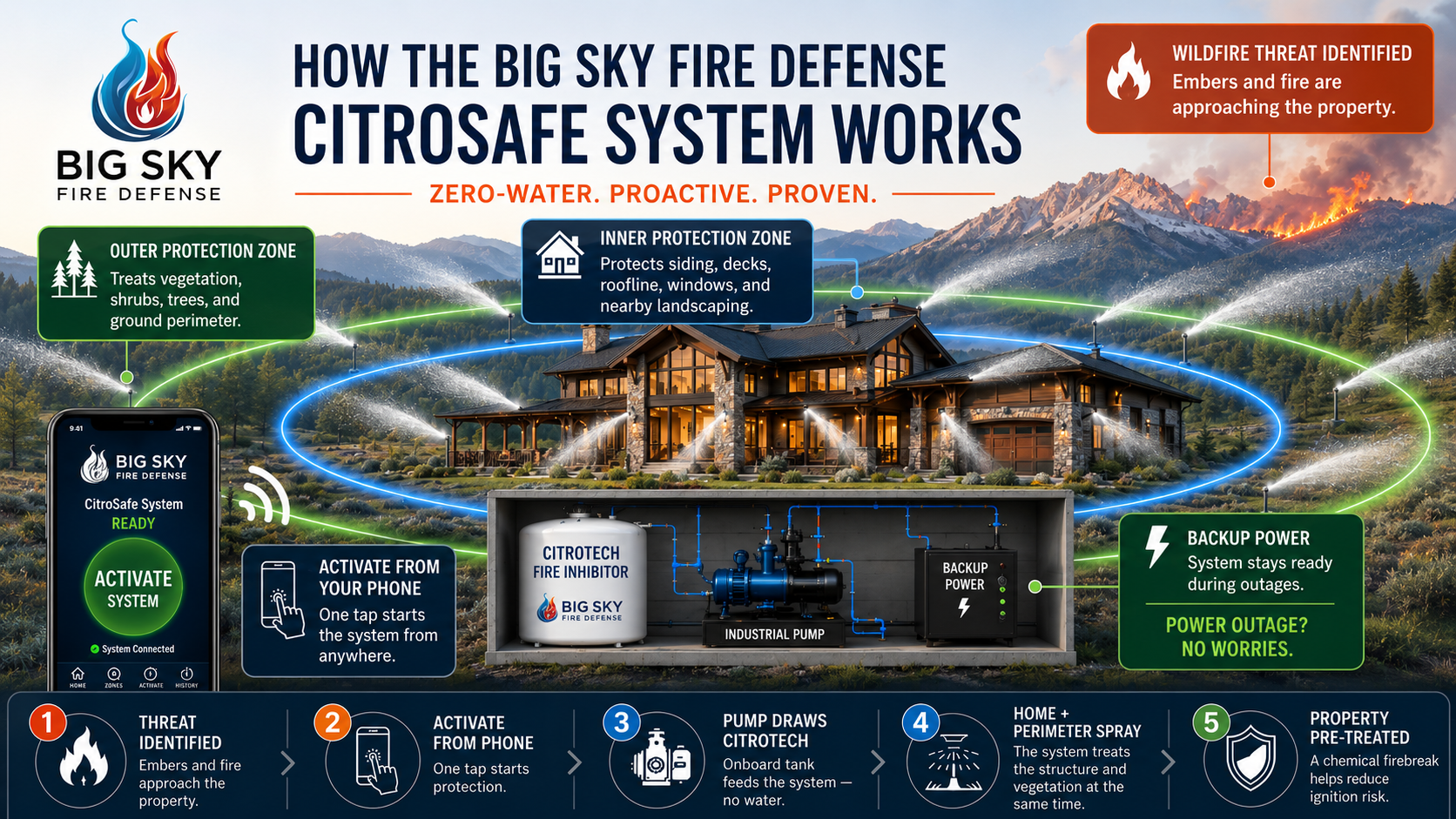
The Layers That Actually Matter
No single product guarantees survival. Wildfire resilience comes from layers working together:
- Thoughtful design
- Class A roofing
- Ember-resistant construction
- Treated framing lumber
- Defensible space
- And, when appropriate, an active exterior wildfire defense system
If I were building a home today, I'd also consider treating the entire framing package with CitroTech® before the walls were closed. It's one opportunity you only get once during construction, and it's worth asking your installer whether framing treatment makes sense for your build—it can add fire performance while preserving the beauty of real wood.
What This Actually Costs
One of the questions I hear most often is, "How much does wildfire protection cost?" The honest answer is that it depends on when you make the decision. Designing wildfire resilience into a home during construction is almost always less expensive than retrofitting later. As a rough anchor, homeowners can often plan for roughly 3–10% of the build budget—but the real number depends entirely on your property, which is exactly what we figure out together. If you're building a multi-million-dollar home, allocating a small percentage of the budget toward wildfire resilience may be one of the smartest investments you'll ever make.
Every property is different. Every solution should be too. That's why we start with a conversation, not a quote.
Where to Start
If wildfire is on your mind—whether you're building, remodeling, or protecting a home you've had for years—schedule a discovery call with Big Sky Fire Defense. We'll walk through your situation, your concerns, and where you sit on the risk spectrum, and we'll tell you honestly what layers actually make sense for you. Sometimes that's a full exterior defense system. Sometimes it's defensible space and a few construction details you can handle yourself. Either way, you'll leave the call knowing more than when you started.
After three decades of building homes, my approach is simple: I recommend the same systems and strategies I'd choose for my own home. That's the right way to do business.
If wildfire is on your mind, let's talk it through—where you sit on the risk spectrum, and which layers actually make sense for your property.
Schedule a Discovery CallAbout the author. Benton Rooks is the founder of Big Sky Fire Defense. He spent more than 30 years as a custom home builder across the West before turning his focus to wildfire resilience, and he built and treated his own forest home the same way he now builds for clients.